In this article
Key facts
Microsoft 365 — visible price increase
Change: Business Basic with Teams moved from $6 to $7 per user per month; Standard moved from $12.50 to $14.
Applied: July 1, 2026; existing customers at renewal.
Compare: The same suite, Teams status, geography, and renewal date.
GitHub Copilot — new usage meter
Change: Premium requests became token-priced GitHub AI Credits. Pro includes $10 base + $5 flex = $15 total usage; Pro+ includes $39 base + $31 flex = $70.
Applied: June 1, 2026; some annual subscribers later.
Compare: Base credits, variable flex allotment, model usage, and overages—not only the $10 sticker.
Webflow — new plan lineup
Change: Basic was repriced; CMS and Business were replaced by Premium.
Applied: May 13–November 16, 2026, depending on the account.
Compare: The old plan, new plan, billing cadence, and changed limits.
These are public US list-price and packaging changes checked on August 13, 2026. Taxes, currencies, negotiated contracts, discounts, and renewal timing can produce a different invoice.
Microsoft 365 raised selected prices, not every plan
Microsoft's official 2026 pricing table shows Business Basic with Teams moving from $6 to $7 per user per month and Business Standard moving from $12.50 to $14. Business Premium stayed at $22.
That is a 16.7% increase for Basic and 12% for Standard when comparing the same US suite. The new commercial prices took effect July 1, 2026, while existing customers remained on their previous price until renewal. Consumer and education subscriptions were not part of this commercial update.
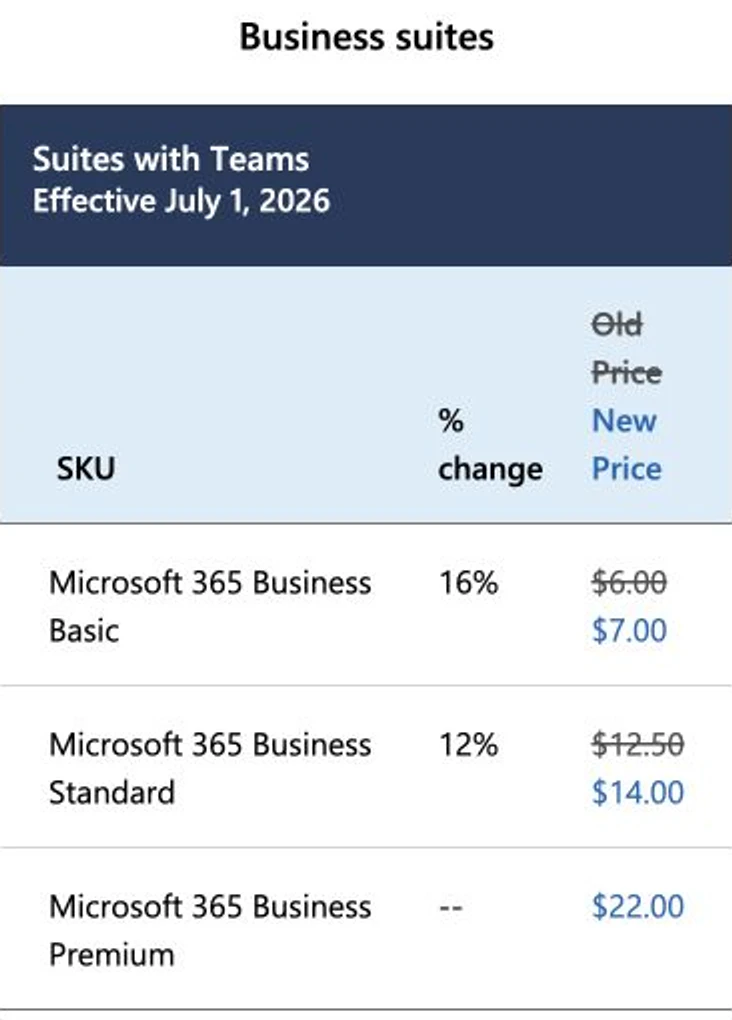
Screenshot: Microsoft's licensing update shows the official mobile suites-with-Teams table: Basic $6→$7, Standard $12.50→$14, and Premium unchanged at $22. Captured 2026-08-13. A disclosed 2× Retina fallback preserves the official source content without alteration.
T-Minus365's February 15, 2026 walkthrough helps administrators interpret the rollout. Microsoft's table and FAQ remain the authority for the prices and eligibility rules.
What this proves: a conventional price increase still requires the exact SKU and renewal date. “Microsoft 365 went up” is too broad because some products were unchanged.
GitHub Copilot kept the sticker and changed the meter
GitHub moved Copilot from premium request units to token-priced GitHub AI Credits on June 1, 2026. A May 12 follow-up then added a variable flex allotment without changing the sticker price. Copilot Pro remained $10 per month but now includes $10 in base credits plus $5 flex, or $15 total usage. Pro+ remained $39 with $39 base plus $31 flex, or $70 total.
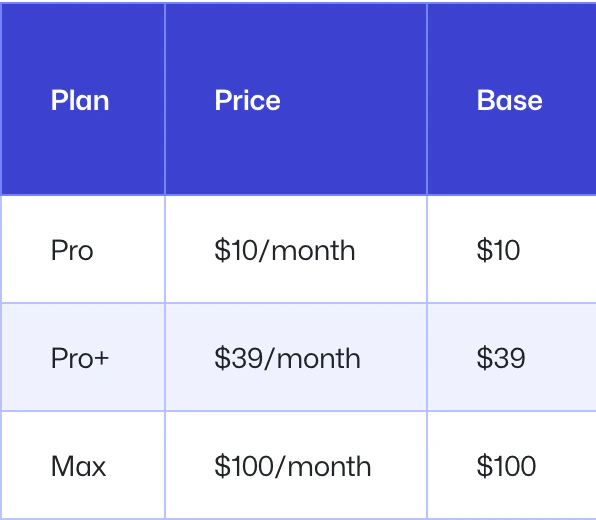
Screenshot: GitHub's May 12 update shows each individual plan's sticker price and fixed base credits. Native 2× mobile capture, cropped without changing the table on 2026-08-13.
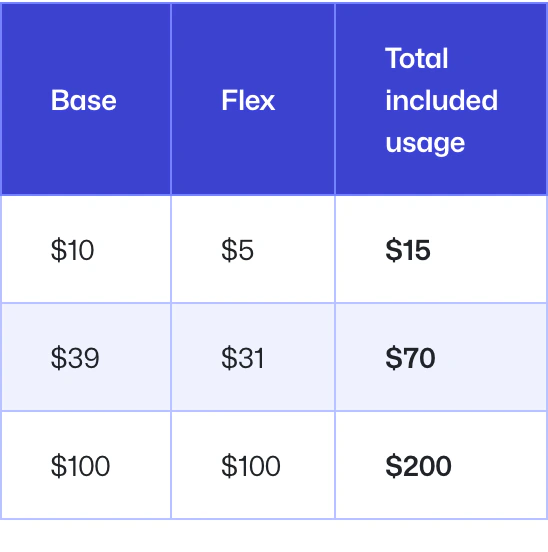
Screenshot: the same official GitHub table is scrolled to the Base, Flex, and Total columns, including $15 for Pro and $70 for Pro+. Native 2× mobile capture, cropped without changing the table on 2026-08-13.
The visible monthly price therefore did not tell the whole story. Credit consumption varies with model rates and token usage, and the flex portion can change over time; GitHub says only the base credits are fixed. Copilot code review can also consume GitHub Actions minutes. Annual Pro and Pro+ subscribers stayed on the older premium-request model until their annual term expired.
The rollout drew enough criticism for TechCrunch to cover the customer backlash. That reporting documents reaction, not the billing rules; GitHub's own announcement is the source for those.
What this proves: a subscription can cost the same at checkout while delivering a materially different allowance. Monitoring only the dollar figure would miss the change.
Webflow changed prices, plans, and limits together
Webflow's May 2026 update moved Basic from $14 to $15 on annual billing and from $18 to $25 monthly. It also replaced the old CMS and Business Site plans with a new Premium plan at $25 annually or $39 monthly.
The old pricing cards are preserved in a dated April 20, 2026 capture: CMS was $23 annually / $29 monthly and Business was $39 / $49. A former CMS customer can therefore pay more after migration, while a former Business customer can pay less. But Premium also changes included limits, including bandwidth, so neither outcome is a pure price comparison.

Screenshot: Webflow's May announcement shows the branded mobile article context, migration guidance, and the complete Basic price paragraph. Captured 2026-08-13. A disclosed 2× Retina fallback preserves the official source content without alteration.
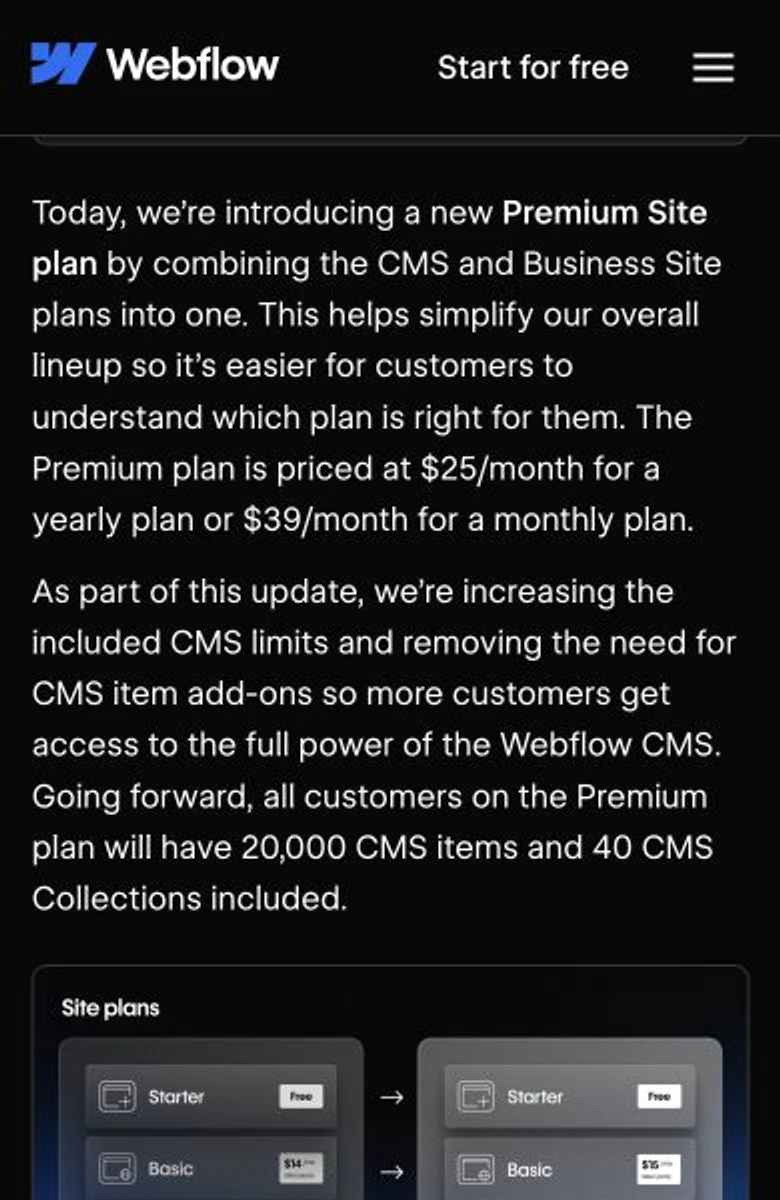
Screenshot: the same official Webflow announcement shows the complete Premium pricing paragraph, surrounding CMS-limit explanation, and Webflow navigation. Captured 2026-08-13. A disclosed 2× Retina fallback preserves the official source content without alteration.
New purchases changed on May 13. Most existing sites moved at renewal or a billable change on or after June 29; sites in Freelancer or Agency Workspaces and some legacy-priced sites move on or after November 16, 2026.
What this proves: plan consolidation can raise one customer's bill and lower another's while changing what both receive. The old plan name and limits are part of the evidence.
The useful pattern: monitor three separate pricing-page regions
These 2026 cases reveal three different change surfaces:
- Price and billing cadence: the amount, currency, “per user” label, and monthly-versus-annual setting.
- Included value: credits, requests, seats, storage, bandwidth, AI access, and overage rules.
- Migration terms: effective date, renewal date, grandfathering, and the FAQ explaining who moves when.
Watch those regions separately instead of treating the whole pricing page as one signal. That makes a meaningful change easier to distinguish from a rotating testimonial, navigation edit, or cookie banner. Our guides explain how to reduce false website-change alerts and why visual monitoring is often enough for a focused public-page condition.
PageDog did not reconstruct these historical changes; the official announcements and dated Webflow capture did. For the next change, PageDog can establish a dated local baseline on your Mac and check the exact visible price, allowance, or renewal block you select. It does not see negotiated contracts, bypass access controls, or recover a page from before monitoring began. The price tracker for any website shows how to keep one watched condition narrow.
Before calling something a price increase
Check five things:
- Are the old and new numbers in the same currency and billing cadence?
- Are the plan, seat, and included allowance genuinely comparable?
- Is the cited date the announcement, effective date, or customer renewal date?
- Does the change affect new customers, existing customers, or only a legacy cohort?
- Did the headline price change, or did the vendor change the meter underneath it?
For the 2026 examples above, the answers are deliberately different. Microsoft changed the visible number; GitHub changed how usage is counted; Webflow changed the comparison basket. That distinction is more useful than a longer list of older price increases.
Research note
We checked every underlying source on August 13, 2026. Official vendor sources carry the factual claims; the dated Webflow page establishes its previous list prices. Independent coverage is used only to document the GitHub reaction, not to prove GitHub's billing terms.