In this article
Start with the official booking notice
On October 4, 2026, Yellowstone National Park Lodges’ camping page names five sites moving to Recreation.gov: Bridge Bay, Canyon, Grant, Madison and Fishing Bridge RV Park. The operator says the campgrounds remain under its management while the reservation channel changes. It also says the new system will allow campers to reserve individual sites.
Use that notice as your starting point for a 2027 trip. It explicitly recommends the newsletter at the bottom of the page for announcements. If occasional general updates are enough, that is the simplest native option while you wait for more detail.
Then follow the official campground listing for your intended stay. A familiar search result, an old confirmation email or a guide written for 2026 can take you to the wrong booking system for next summer.
Which reservation window applies?
| What you want to book | Window to verify |
|---|---|
| Summer 2027 at the five transferring campgrounds | Recreation.gov; approximately six months in advance. Check the individual listing for the exact release details. |
| A Yellowstone lodge or cabin | The lodging reservation policy, which uses a different advance-booking schedule. |
| A campground already listed on Recreation.gov | That facility’s season, booking window and available dates. |
| Backcountry camping | The separate Yellowstone backcountry permit process. |
The lodging reservation policy describes a rolling window of up to 13 months, with the next applicable month opening on the fifth. The same page marks the 2027 campground exception. Do not lift the lodging release day or its Mountain Time opening hour into a campground reminder.
For an illustrative July 2027 camping trip, six months earlier points you toward January 2027. That is a planning estimate, not a confirmed sale date or time. Record the actual release instructions once the relevant Recreation.gov page supplies them. An approximate window does not justify promising that a particular site opens at midnight on a particular day.
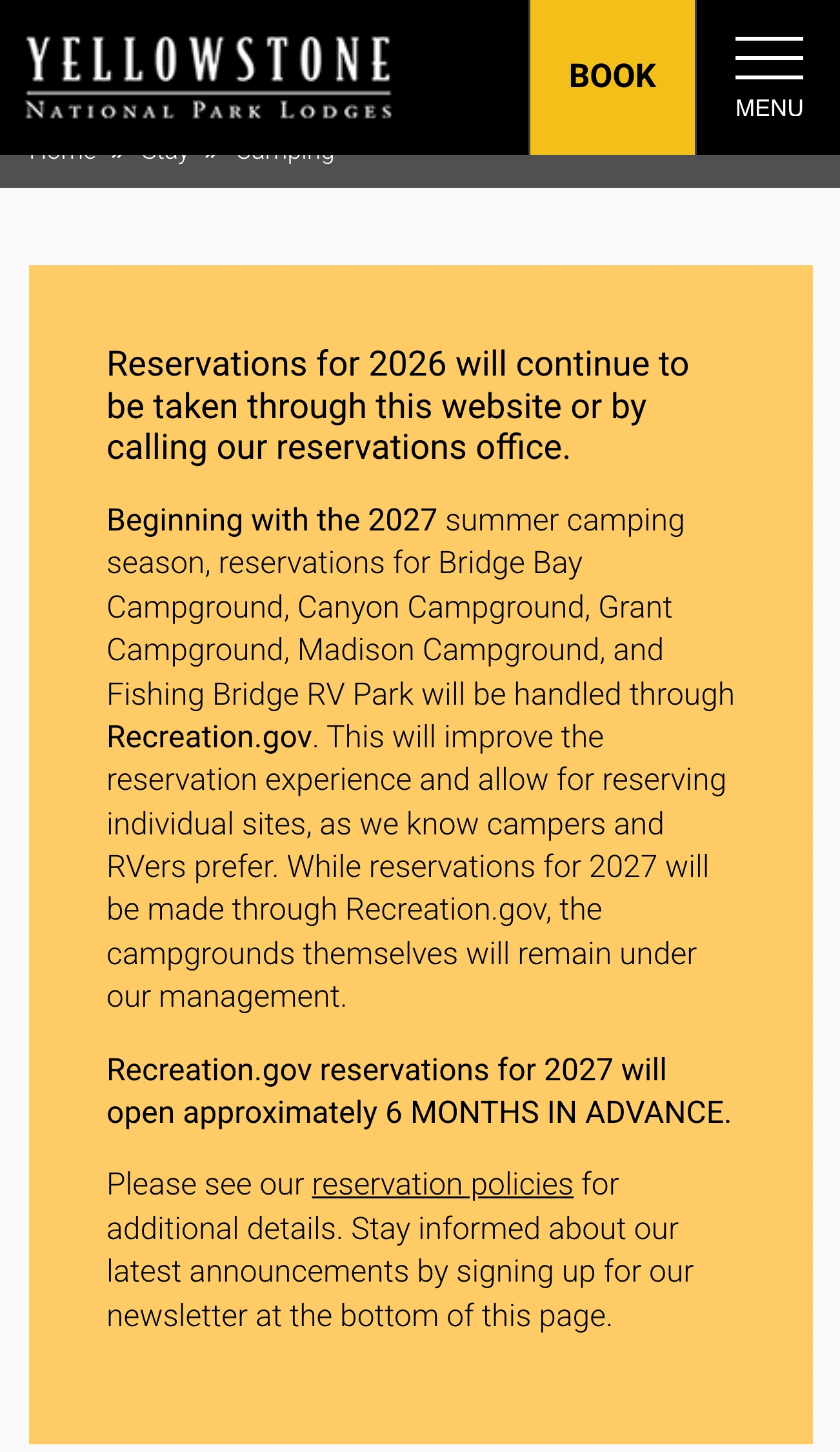
Source: Yellowstone National Park Lodges, captured October 4, 2026. The highlighted notice separates the 2027 camping change from the preceding reservation system.
An empty calendar does not always mean sold out
Before treating a blank result as a cancellation hunt, identify the state of your dates:
- Not yet released. Your arrival is outside the booking window, or the upcoming season has not been loaded. Save the release information and return when the dates become reservable.
- Outside the operating season. Compare your stay with the campground’s published opening and closing dates. A booking tool cannot create a campsite night when the facility is closed.
- Released but unavailable. Check nearby dates and compatible site types, then consider the native availability alert.
- A mismatch in your search. Recheck campground, arrival, departure and equipment requirements before deciding the whole park is full.
The National Park Service campground guide is useful for comparing facilities and restrictions. Its table still labels its season dates 2026 at this check, so do not silently reuse those dates for 2027. For example, Fishing Bridge is for hard-sided vehicles; a result there does not become a suitable tent reservation merely because it is available.
Keep a short planning note with the campground name, intended nights, equipment size, official listing URL and date last checked. This makes it easier to spot whether the missing piece is a release date, a suitable site or a different travel plan.
Use Recreation.gov’s availability alert for sold-out dates
Once your dates are released and the facility offers the option, start with Recreation.gov’s own Availability Alert. Its official reservation tips explain that alerts notify you when a booked campsite matching your preferences becomes available.
The alert does not hold the site or guarantee a reservation. Other people can receive the same notice, and you still need to open the official booking page and complete the process yourself. Prepare realistic alternatives before the alert arrives, including another campground or different nights.
A native cancellation alert and an announcement watch solve different problems. The first helps after inventory has been released. The second can help while an official page still lacks the exact information needed to plan your booking attempt. Avoid paying for an extra monitoring setup when the built-in alert already answers your question.
See the setting before choosing a campground
Yellowstone National Park Lodges’ official overview shows the in-park lodging and camping context. Use it to orient your trip, then return to the current campground listing for operating dates and site requirements.
Published April 26, 2024. This historical overview predates the 2027 reservation change and is not evidence of today’s booking channel or availability.
Watch for the missing release details on your Mac
If the general newsletter is broader than you need, PageDog can check a selected visible announcement area for a specific outcome. Open the official camping page on your Mac and select the 2027 transition notice, including its heading. For a Canyon trip, an example condition is:
Notify me when this notice publishes a specific date and time for booking Canyon Campground’s summer 2027 sites, or a direct official listing with those release instructions. The approximate six-month statement alone does not count.
Save a baseline and review the selected capture. Use a modest schedule while waiting for an announcement; more frequent checks cannot turn an unannounced release into a reservation. The guide to monitoring one part of a website explains why the relevant paragraph is a better target than the whole page.
PageDog runs checks locally while the app is open, your Mac is awake and the network is available. Hosted AI evaluates the selected evidence, so local execution does not mean every part of the analysis stays offline. It does not book a campsite, hold inventory or bypass a login or CAPTCHA. If the page needs attention, resolve that manually and confirm the selected area still contains the right notice.
After an alert, read the official source and put the confirmed release details in your own calendar. Stop or revise the watch once it has answered the question. For broader setup choices, see the website-change monitoring guide.