
In this article
The important distinction is between newly available primary tickets, a later on-sale allocation, and fan-to-fan resale listings. They can all make an event page look available again, but they are not the same offer.
Key facts
| Question | Short answer |
|---|---|
| Can Ticketmaster release more tickets? | Yes. Additional inventory may become available before the event. |
| Is another release guaranteed? | No. The Event Organizer controls inventory and availability. |
| Is there a standard release time? | No public schedule applies to every event. |
| Does a gray section mean the whole event is sold out? | Not necessarily. It can mean no tickets are available or none match the active filters. |
| Are pink listings newly released primary tickets? | No. Ticketmaster uses the pink resale symbol for tickets sold by other fans. |
Why Ticketmaster tickets can reappear
Ticketmaster's Standard Purchase Policy says Event Organizers set ticket prices and seating locations. It also says additional tickets may occasionally become available before an event, while making clear that Ticketmaster does not control that inventory or its availability.
Ticketmaster's July 14, 2026 article about late-release tickets and artist waitlists is more specific about one mechanism. It says production and venue-configuration changes can open seats closer to show day, sometimes only days or hours before doors. Its Ticketmaster-and-Seated waitlist is limited to participating music events in the United States and Canada and is enabled event by event, so it is evidence that late inventory exists—not a universal fan feature or release schedule.

Screenshot: Ticketmaster Business shows its July 2026 late-release article and the join-waitlist and claim-ticket workflow. Captured 2026-08-03.
That leaves several ways a page can change after it first appears empty:
- The organizer opens more primary inventory. Seats may become sellable later, but there is no universal timetable.
- A later sale stage begins. Ticketmaster's accessibility guide gives a concrete, limited example: when an accessible presale allocation is depleted, buyers can shop again at the general public on-sale.
- Different filters reveal a different result. Ticketmaster says gray seat-map sections can mean either no tickets remain or no tickets match the current search.
- A fan lists a resale ticket. A new pink listing increases marketplace availability, but it is not a fresh face-value release from the organizer.
Ticketmaster can also cancel orders that break a posted ticket limit. It is reasonable to infer that canceled inventory might later become sellable, but the policy does not promise that a specific seat will return or say when it would happen.
When does Ticketmaster release more tickets?
There is no dependable hour, weekday, or number of days before the event. The useful checkpoints come from the event's own sale plan:
| Checkpoint | Why it may matter | What it does not mean |
|---|---|---|
| General public on-sale | Inventory can differ from a presale allocation. | Every presale sellout will receive more seats. |
| A newly announced date or venue update | The organizer may revise the sale plan or available sections. | The original date will automatically gain inventory. |
| Closer to the event | Ticketmaster explicitly says more accessible tickets may be organizer-released closer to some events. | A last-minute release is guaranteed for standard tickets. |
| A new pink seat-map listing | A fan has offered a resale ticket. | Ticketmaster released another primary ticket. |
The safest answer is therefore: check the announced on-sale stages, then rely on official alerts and occasional follow-up. Do not build plans around a rumored “drop time.”
See a real additional-ticket release
One current organizer example shows why social updates are useful. In April 2026, J&B Entertainment announced that a venue upgrade for the Close Your Eyes tour in Canada allowed a limited additional-ticket release at a stated time.
Post: J&B Entertainment on Instagram, published 2026-04-06. The permanent public post demonstrates an event-specific release caused by a venue change. It does not establish a normal Ticketmaster timetable or guarantee that another event will receive more inventory.
Read the seat map before assuming sold out
Ticketmaster's buying tips define three useful map states:
- Blue: the section has tickets that match the search; darker blue means more matches.
- Gray: the section has no available tickets or no tickets that match the search.
- Pink resale symbol: the tickets are being sold by other fans.
Before waiting for another release, remove an overly narrow price, ticket-type, accessibility, or quantity filter and check again. If you need two adjacent seats, a single available seat is not the result you want. If you only want standard tickets, exclude resale from your decision even when the event page becomes active again.
If resale is acceptable, read whether Ticketmaster resale tickets are legitimate before comparing listings. If price is the real constraint, the guide to whether concert ticket prices go down separates new inventory from market-price movement.
Use Ticketmaster alerts first
Add the artist, team, show, and venue to Ticketmaster Favorites. Ticketmaster's Favorites guide says these preferences can trigger notifications for announcements, on-sales, and low availability.
Also subscribe to the artist and venue's official email or social updates. Those channels may announce a new date, production release, venue change, or general on-sale before a seat-map check explains why inventory changed.
Native alerts are not a promise that Ticketmaster will notify you about one exact section, quantity, or maximum price. They are still the correct first layer because they come from the ticketing and event sources themselves.
How to watch for an additional-ticket announcement
If official alerts do not cover the exact change you need, a safer PageDog use is watching a permitted artist or venue announcement page for wording such as “additional tickets released” or “new date added.” Check the page's terms before scheduling a watch, and do not use PageDog in a Ticketmaster waiting room or active on-sale flow.
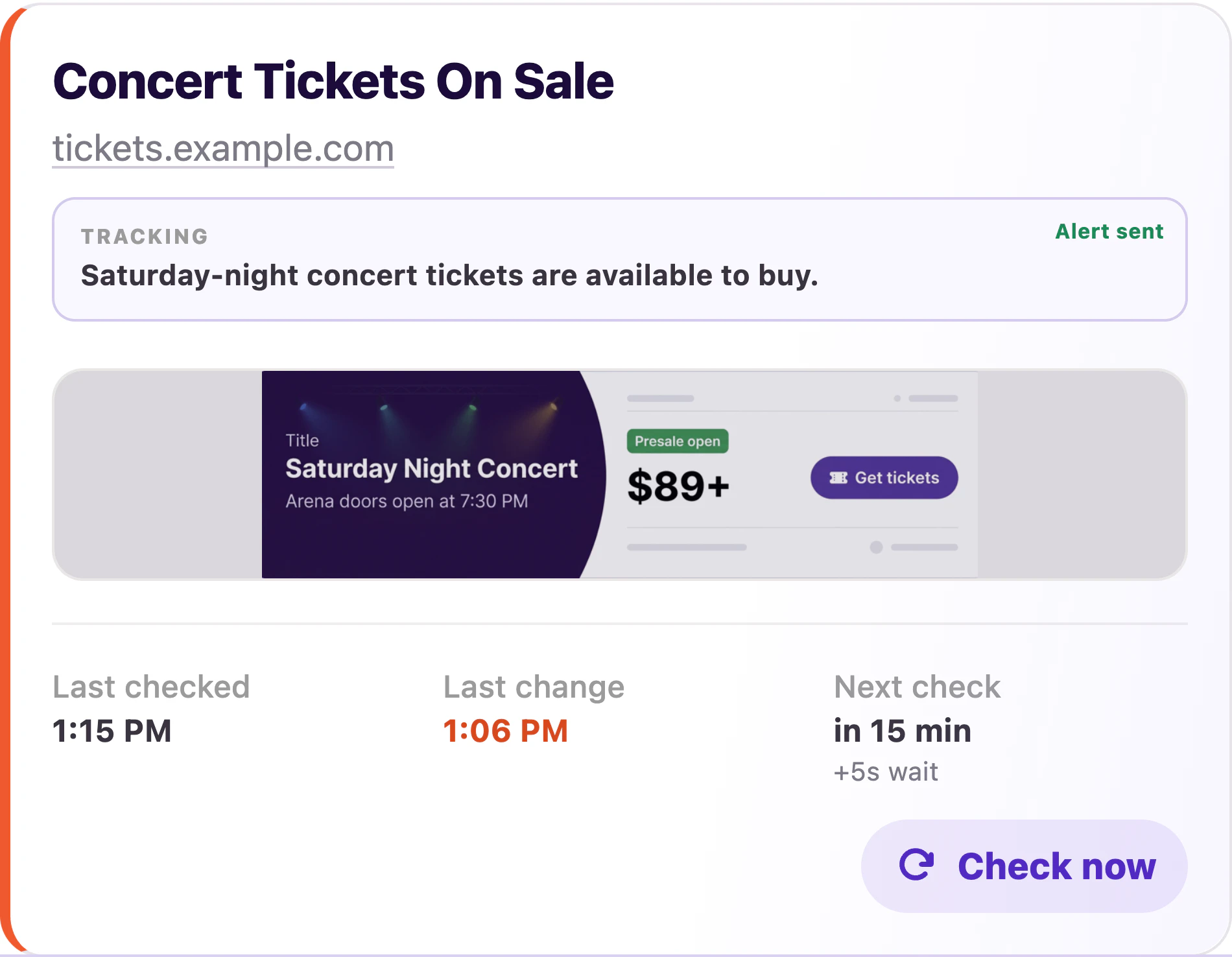
Screenshot: PageDog for Mac shows a focused “Concert Tickets On Sale” watch with an exact availability goal and an alert-sent status. Captured from the current desktop renderer on 2026-08-03.
Select only the stable announcement block that contains the event and release wording. The guide to reducing false website-change alerts explains why that focused evidence is more useful than a whole page containing banners, countdowns, or recommendations. PageDog cannot predict inventory, reserve or buy a ticket, enter or improve a queue position, or bypass a login, CAPTCHA, or anti-bot control. Checks run locally while the app is open and the Mac is awake and online.
Bottom line
Ticketmaster can have more tickets after an event page looks sold out, but no reliable release schedule exists. Start with the official on-sale plan and Ticketmaster Favorites, distinguish primary inventory from resale, and recheck without hammering the page.
Research sources
- Ticketmaster Standard Purchase Policy — organizer control, occasional additional inventory, ticket limits, and availability caveats.
- Ticketmaster Business: Late-release tickets and artist waitlists — production holds, venue changes, late inventory, and the limited Ticketmaster-and-Seated workflow; published 2026-07-14.
- Ticketmaster accessible-ticket guide — a documented example of later allocations and organizer releases closer to an event.
- Ticketmaster ticket-buying tips — map colors, Favorites, and live-sale anti-automation guidance.
- Ticketmaster Favorites guide — native alerts for announcements, on-sales, and low availability.