In this article
Key facts
| Question | Current answer | Important caveat |
|---|---|---|
| When does Claude usage reset? | Session limits reset every five hours | Max plans also have weekly limits with an account-specific reset time. |
| How many messages does Pro include? | There is no guaranteed fixed number | Short plain-text chats consume less than long chats with files, tools, or high-effort models. |
| Are Claude and Claude Code separate allowances? | No | Usage across Claude and Claude Code counts toward the same included plan limits. |
| What happens at the limit? | Wait for the reset, change the workload, upgrade, or use paid extra usage | Extra usage must be enabled and is charged separately at API rates. |
| Is a context-window limit the same as a usage limit? | No | Context limits control how much one conversation can hold; usage limits control plan capacity over time. |
These plan prices and rules were checked on August 25, 2026. Anthropic says capacity can vary with demand and may apply additional limits, so the usage meter in your account is the final source for your current remaining allowance.
Claude plan limits are relative, not message quotas
Anthropic's current plan comparison lists Free at $0, Pro at $20 per month or $200 per year, Max 5x at $100 per month, and Max 20x at $200 per month. “5x” and “20x” describe capacity relative to Pro within a session; they are not promises of a fixed number of prompts.
| Plan | Current US price | Included capacity |
|---|---|---|
| Free | $0 | Limited use; availability and message count can vary with demand. |
| Pro | $20/month or $200/year | Standard paid capacity, with access to Claude Code. |
| Max 5x | $100/month | Five times Pro capacity per session. |
| Max 20x | $200/month | Twenty times Pro capacity per session. |
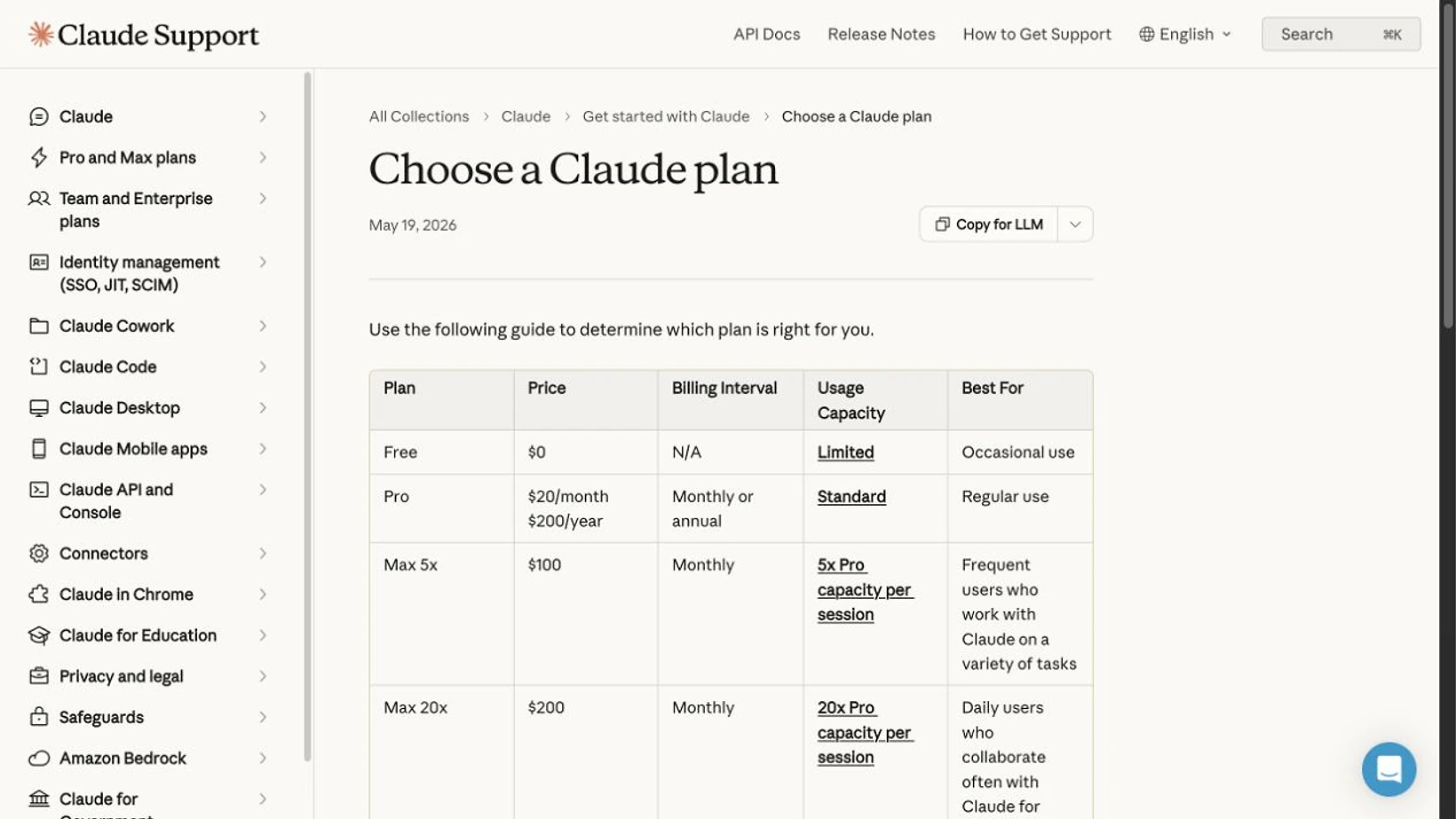
Screenshot: the official Claude plan comparison shows current US prices and relative capacity. Captured 2026-08-25 from a device-scale-2 browser session. The browser bridge exported 1,265 pixels, so the image was deterministically resized and conventionally sharpened to 1,640 pixels without altering the support page or its content.
This is why two Pro subscribers can report different message counts without either being wrong. A short question in a fresh conversation and a high-effort coding session with a large repository are not equivalent units of work.
The five-hour reset is only one layer
Anthropic's usage-credit guide says session-based usage resets every five hours. The window is rolling from the start of a session, so it should not be interpreted as one universal clock time for every user.
Max adds another layer. The current Max plan guide describes a weekly usage limit across all models. Each account receives a fixed weekly reset time, visible under Settings > Usage. Anthropic also says it may apply other weekly or monthly caps and model- or feature-specific limits, so the account meter remains the authority for an individual allowance.
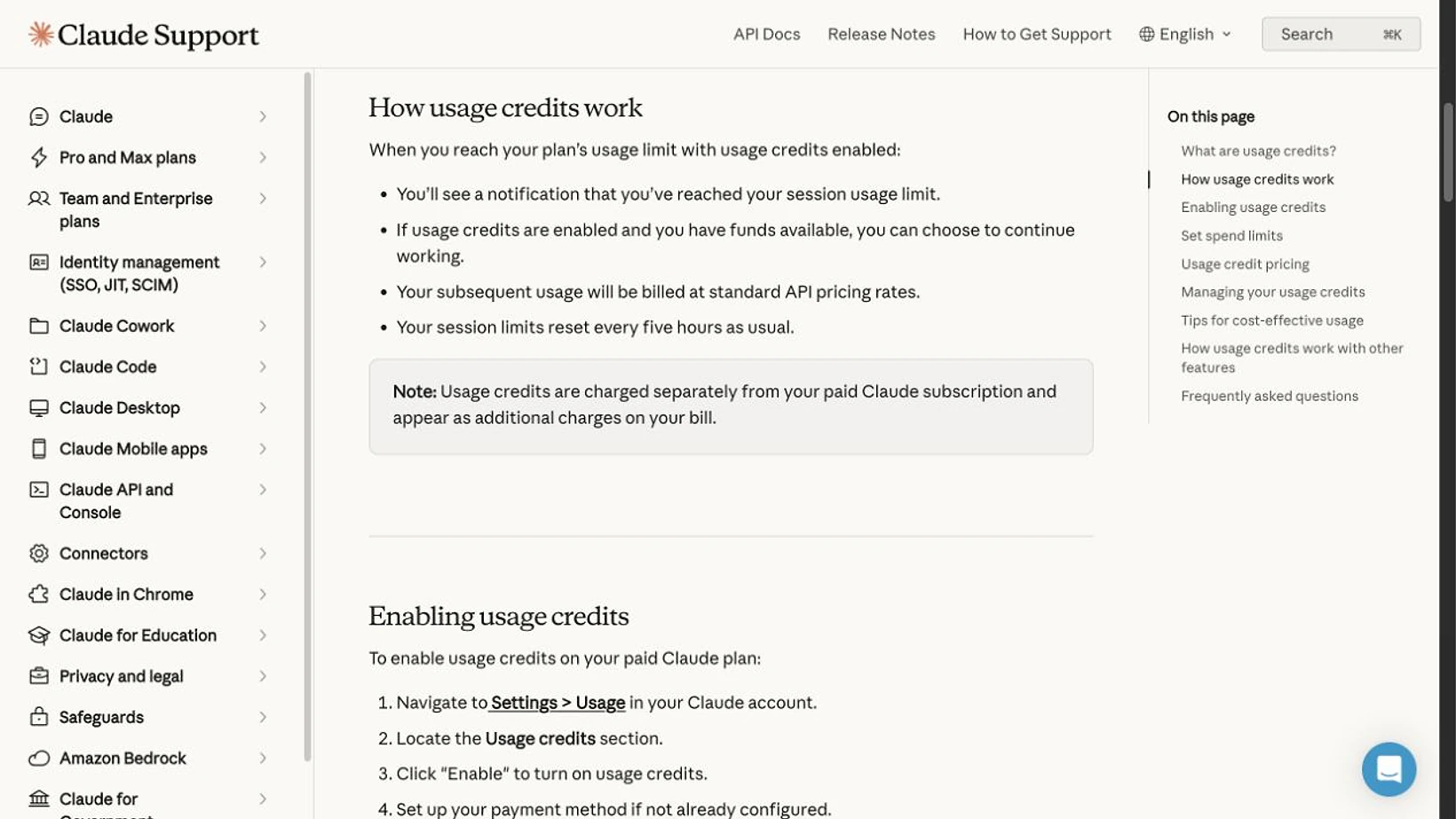
Screenshot: Anthropic's usage-credit guide states the five-hour reset and shared Claude/Claude Code accounting. Captured 2026-08-25 from a device-scale-2 browser session. The 1,265-pixel browser export was deterministically resized and conventionally sharpened to 1,640 pixels without changing the visible text.
The AI Productivity Coach's May 15, 2026 walkthrough offers practical habits for reducing avoidable usage. Treat any message-count estimates in a third-party video as examples, not official quotas; Anthropic's meter and support articles govern the current plan rules.
What uses more Claude capacity
The official explanation of usage and length limits identifies several factors that change consumption:
- Longer conversations cost more because Claude must process more prior context with each turn.
- Attached documents, images, and large codebases add material for the model to read.
- Some models and higher effort settings consume allowance faster than lighter choices.
- Web search, connectors, Research, and other features can add tool calls and retrieved content.
- Usage is shared across Claude web, desktop, mobile, and Claude Code when they use the same subscription.
- System capacity and demand can affect Free and paid allowances.
A warning such as “you have 10% remaining” is therefore more useful than a generic claim that Pro includes a particular number of messages. It reflects your actual mix of work in the current window.
Usage limits and context limits solve different problems
A usage limit is the plan allowance you can consume during a session or week. Waiting for a reset, upgrading, or enabling extra usage can address it.
A context or length limit is the maximum material Claude can process in one conversation. Waiting five hours does not make an oversized conversation smaller. Start a focused new chat, remove unnecessary attachments, or summarize the relevant state instead.
This distinction matters in Claude Code. The Claude Code plan guide confirms that Claude and Claude Code share the plan's usage pool. A long coding session can therefore reduce the allowance available in the Claude app, and vice versa.
What happens after the included limit
Paid Pro and Max users can enable extra usage funded with prepaid credits. Once included usage is exhausted, qualifying requests continue at standard API rates and appear as a separate charge. Extra usage is optional; it is not included in the Pro or Max subscription price.
That option is useful when an occasional deadline is more expensive than a small overage. It is less predictable for an always-on workload. Set a monthly spending limit, review the meter, and consider the API with explicit budgets if automation—not interactive work—is the primary use case.
How to make a Claude allowance last longer
- Start a new conversation when the task changes instead of carrying unrelated history.
- Attach only the files or folders needed for the current result.
- Choose a lighter model or lower effort when the task does not require maximum reasoning.
- Disable web search, connectors, or tools that the task does not need.
- In Claude Code, compact or clear accumulated context and scope the repository deliberately.
- Check the account usage meter before a long session; do not rely on a universal message-count estimate.
These steps reduce wasted context. They do not bypass Anthropic's limits, and a plan upgrade only helps when the underlying workload genuinely needs more included capacity.
How to notice when Anthropic changes a public limit
Use Claude's native usage meter for your personal allowance. To watch public policy wording, PageDog can monitor one stable visible region on an official Help Center page—for example, the “every five hours” reset rule or a Max-plan weekly-limit paragraph—and notify you when that selected evidence changes. Keep each condition narrow and review the before-and-after capture; do not monitor the entire support site or treat a public-page monitor as an account meter. For broader product changes, use the Claude release-notes source map, the guide to reducing false website-change alerts, or PageDog documentation.
Best for: a published plan price, reset rule, or support-policy sentence that can change between manual checks.
Main limitation: PageDog can see only the public region you select; it cannot read your private remaining allowance or replace Claude's in-account meter.
A practical Claude usage rule
If you hit a limit once, wait for the meter's reset and reduce unnecessary context. If it happens repeatedly during focused interactive work, compare Pro with Max 5x before paying for 20x. If the workload is programmatic or must never pause, price the API and explicit spend controls instead of treating a chat subscription as unlimited infrastructure.
Research sources
- Choose a Claude plan — current Free, Pro, and Max prices and relative capacity.
- What is the Max plan? — session capacity and weekly limits.
- Manage usage credits for paid Claude plans — five-hour resets, shared usage, and extra usage.
- How do usage and length limits work? — factors that affect usage and the context-limit distinction.
- Claude Usage Limits: How to Never Hit Them Again (2026) — third-party workflow advice, published May 15, 2026.